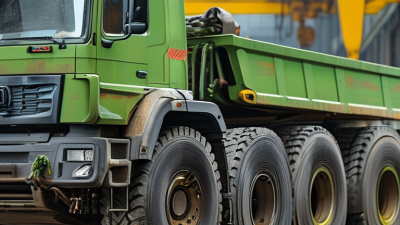
Picking the right Belaz Differential isn’t just about flipping through a catalog — it’s a practical choice that can really impact your truck’s performance. Things like traction, tire wear, heat buildup, and even how much downtime you’ll face matter a lot. If you opt for a unit that looks fine during an inspection, you might still run into trouble once you hit a heavy load or start climbing rough terrain. It might seem alright on the surface, but under real working conditions, it could still fail.
The mining equipment market keeps growing. According to Grand View Research, in 2023, the global value of mining gear was around USD 135 billion. They’re saying automation, reliability, and boosting productivity are the main factors driving that growth. Deloitte’s Tracking the Trends 2024 report echoes this — miners want more output, less risk of maintenance issues, and better energy efficiency. Because of all that, choosing a differential isn’t as simple as just matching a model number; it’s way more technical now.
Andrey Vlasov, a specialist in BelAZ drivetrains, puts it simply: “A differential has to match the truck’s actual working conditions, not just what’s on the label.” That’s a point worth keeping in mind. Make sure to check the axle load, torque capacity, gear ratio, lubrication temperature, tire size, and even the gradient of the haul roads. Don’t forget to confirm compatibility with the brakes and final-drive systems too. Even if a part is listed as used on certain Belaz models like 75135, 75170, 75302, or 75306, that doesn’t automatically mean it’ll fit or work interchangeably.
And real-world experience counts. Things like mud, sharp rocks, long downhill braking, or repeated starts can really change how a differential performs over time. Sometimes, missing a small detail during selection can turn into an expensive mistake — so it pays to be thorough. Always have manufacturer drawings and serial-number records on hand whenever you’re making a purchase. While published reports can offer good guidance, they can’t replace inspecting the actual truck and its components. That’s really where this whole process starts — with solid evidence, understanding operating conditions, and being ready to question what might seem like a perfect match at first glance.
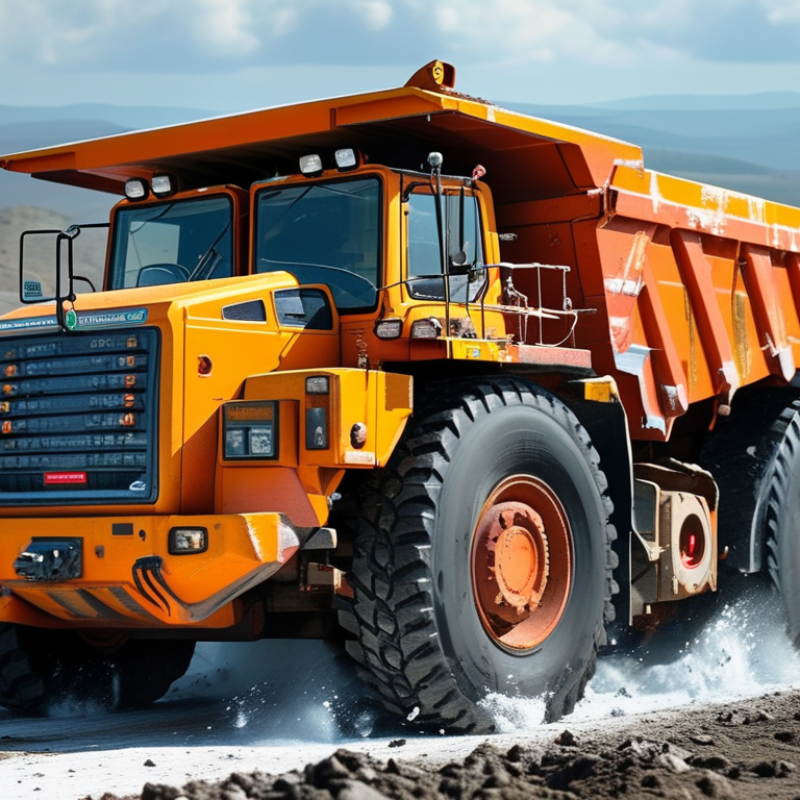
BelAZ payload classes from 30 to 450 tonnes provide a practical starting point for differential selection. A 30-tonne truck usually faces different torque demands than a 220-tonne hauler. Payload alone, however, does not define the duty cycle. Record haul distance, road gradient, cycle frequency, tire size, and average loading time. Short, steep hauls can create severe thermal stress, even when the truck operates below its rated payload.
Match the differential to continuous torque, peak shock loads, axle speed, and expected operating hours. Check the gear ratio against wheel torque and engine performance. Oil temperature matters. So does housing rigidity. A differential that survives occasional heavy loading may fail under repeated cycles. Field experience shows that clean lubricant, correct preload, and regular magnetic-plug inspections often reveal problems early. Small metal particles can signal larger damage.
Reference terms may include Belaz 7540 Belaz 7547 Belaz 75473 Belaz 540 Belaz 549 GMP 75406-1700004 (3+1) 30t. 75406-1700004 (3+1) 30t. These identifiers should be verified against drawings, serial numbers, and axle specifications before purchase. A neat payload match is not always enough. I have seen selection decisions change after reviewing actual gradients and loaded cycle times. That is the part many assessments miss. When conditions vary, choose a differential with suitable thermal capacity and service support, not merely the lowest listed cost.
Choosing the right differential begins with a realistic torque calculation, not a catalog number. A 450-ton payload is only part of the load. Add the truck’s empty mass, cargo distribution, tire radius, rolling resistance, and driveline efficiency.
For an 18% grade, the slope angle is approximately 10.2 degrees. Using payload alone, the climbing force is about 780 kN. With a practical rolling resistance estimate of 3%, the total force reaches nearly 915 kN. Assuming a loaded tire radius of 1.5 meters, wheel torque approaches 1.37 MN·m. This figure represents total required wheel torque, not necessarily the torque carried by one differential.
The real calculation must include gross vehicle mass. It should also consider acceleration, uneven ground, tire slip, and torque-sharing behavior. A short acceleration event can raise demand sharply. For example, adding 0.05 g may push total wheel torque beyond 1.7 MN·m under similar conditions. That estimate is useful, but imperfect.
Field measurements matter. Check axle loads on scales, record grade length, and compare calculated torque with drivetrain temperatures. A differential should handle continuous duty and repeated shock loads without overheating. Allowing a conservative service factor is wise, yet excessive margin can increase weight and reduce efficiency. The final selection should be reviewed against verified test data, lubrication limits, and the manufacturer’s load-rating method.
How to Choose the Right Differential for Your Needs?
Match Differential Type to Mechanical and Electric Drivelines
Choosing the right differential starts with the driveline, not the catalog number. Mechanical systems usually need a differential matched to engine torque, gear reduction, axle load, and tire size. Check the duty cycle carefully. A vehicle carrying heavy material uphill needs stronger gear teeth, reliable lubrication, and controlled heat dissipation. Field inspections should also examine backlash, seal condition, and unusual housing temperatures.
Tips: Record peak torque, average speed, axle load, tire diameter, and operating temperature. Compare these figures with the differential’s continuous and peak ratings. Do not size the unit from horsepower alone. That shortcut can fail.
Electric drivelines require a different review. Electric motors deliver high torque immediately, which can stress gears during low-speed starts. A single-motor system may use a conventional differential after a reduction gearbox. Dual-motor layouts may need electronic torque coordination instead. Check reduction ratio, cooling capacity, regenerative braking loads, and control-system compatibility. Physical space matters too; cables, sensors, and cooling lines need safe clearance. A quieter drivetrain is not automatically a stronger one. In practice, early calculations can miss shock loads from uneven ground. Rechecking the design with real route data is wise.
| Differential Type | Compatible Driveline | Typical Torque Capacity | Traction Behavior | Efficiency Characteristics | Recommended Operating Conditions | Key Selection Checks |
|---|---|---|---|---|---|---|
| Open Differential | Mechanical driveline; suitable for conventional transmission and axle layouts | Select according to axle torque, gear ratio, and service factor; commonly used in moderate-to-high load applications | Allows different wheel speeds during turns, but torque is limited by the wheel with the least available grip | Very low internal losses during normal operation; no additional clutch drag | Firm, level ground, paved haul roads, and routes with consistent traction | Check maximum axle torque, bearing loads, lubrication, gear mesh, and wheel-speed difference |
| Limited-Slip Differential | Mechanical driveline; compatible with applications requiring passive traction improvement | Use the manufacturer’s rated input torque and apply a duty-cycle factor for shock loading | Transfers part of the available torque to the wheel with better grip while preserving normal turning action | Slightly higher losses than an open differential because of clutch or friction elements | Mixed surfaces, damp haul roads, moderate grades, and intermittent wheel slip | Verify bias ratio, clutch wear limits, oil specification, heat rejection, and maintenance access |
| Torque-Biasing Differential | Mechanical driveline; appropriate where automatic torque distribution is preferred | Choose a unit rated above peak engine or transmission torque, including transient load factors | Uses internal gearing to bias torque toward the wheel with greater resistance; requires some load on both sides | Generally efficient with limited wear because it does not rely primarily on friction clutches | Uneven terrain, changing traction, and frequent cornering under load | Check minimum resistance requirements, bias ratio, gear strength, oil cleanliness, and thermal limits |
| Selectable Locking Differential | Mechanical driveline; may be hydraulically, pneumatically, or electrically actuated | Size for the highest expected locked-axle torque and the most severe shock load | Provides near-equal wheel torque when engaged; substantially improves mobility in severe low-traction conditions | Efficient when disengaged; tire scrub and driveline stress can increase if locked on high-grip surfaces | Mud, loose rock, steep grades, cross-axle conditions, and construction or mining work areas | Confirm engagement speed limits, actuator pressure or voltage, control logic, seal protection, and emergency release |
| Fixed Spool or Fully Locked Unit | Specialized mechanical driveline only; not intended for continuous operation on high-grip roads | Requires robust gears, shafts, bearings, and housing because both axle outputs rotate together | Maximum traction continuity, but no speed compensation between the left and right wheels | Low differential losses, but high tire scrub and mechanical stress during turns | Dedicated off-road routes, soft ground, and applications where continuous wheel synchronization is required | Check turning radius, tire-size matching, axle alignment, driveline wind-up, and route restrictions |
| Single-Motor Electric Axle Differential | Electric driveline with one traction motor connected to a reduction gear and differential | Match continuous and peak motor torque, reduction ratio, inverter limits, and regenerative-braking torque | Provides conventional left-right torque distribution; traction control can be implemented through motor and brake control | High drivetrain efficiency is possible with correct gear ratio, bearing selection, and lubricant management | Hybrid or battery-electric vehicles using a centralized electric axle drive | Check motor speed, peak torque duration, reduction ratio, inverter response, cooling, insulation, and encoder compatibility |
| Dual-Motor Electric Torque-Vectoring Axle | Electric driveline with independently controlled motors for the left and right wheels | Size each motor, gearset, shaft, and bearing for continuous torque plus short-duration peak and regenerative loads | Can control wheel torque electronically, improving traction, cornering stability, and slip management without a traditional locking device | Potentially high efficiency, although two motors, inverters, and reduction stages add system complexity | Variable terrain, frequent traction changes, precision maneuvering, and advanced electric off-road platforms | Check synchronization, control latency, battery current, thermal balance, fault handling, and software safety functions |
| Planetary Final-Drive Differential Assembly | Heavy-duty mechanical or electric driveline requiring high reduction and compact torque transmission | Select by wheel torque, reduction ratio, shock factor, duty cycle, and allowable planetary gear load | Provides high wheel torque through planetary reduction; differential function depends on the integrated axle design | Efficient at high reduction ratios when correctly lubricated, aligned, and thermally managed | High-payload haulage, steep grades, low-speed operation, and severe off-road duty cycles | Check reduction ratio, planetary load sharing, housing stiffness, oil cooling, bearing life, and serviceability |
Choosing the right differential starts with verification, not guesswork. A 64-km/h top speed can help confirm the expected gear ratio when matched with the actual tire diameter. Measure the loaded tire, because its contact radius may differ from the sidewall specification. For a tire diameter of D meters, calculate wheel speed with: 64,000 ÷ (π × D × 60). Then compare wheel rpm with the differential input rpm. Gear ratio equals input rpm divided by wheel rpm. Check the transmission and final-drive data too.
Tips: Measure both rear tires. Confirm engine speed with a calibrated tachometer. Check the axle tag and service records. A small tire difference changes the result.
In field inspections, I have seen clean-looking housings hide incorrect ratios or worn gears. The truck may reach 64 km/h, but only under specific load, road, and engine conditions. Tire slip, speedometer error, and uneven wear can distort the calculation. I would not select a replacement from speed alone. Compare mounting dimensions, spline details, lubrication requirements, and rated load.
The search phrase “Belaz 75135 Belaz 75170 Belaz 75302 Belaz 75306 Wheel Motor Assembly 75132-2405010-10 for Belaz Dump Trucks” may identify a related assembly, but compatibility still requires technical confirmation. I may be wrong if the recorded top speed came from an unloaded test. Verify it against manufacturer documentation and measured input speed before ordering.
Choosing a differential begins with axle load, not catalog appearance. USGS Mineral Commodity Summaries 2024 reports approximately 2.5 billion metric tons of global iron ore production in 2023. That scale means haul trucks face repeated shock loads, steep ramps, and long duty cycles. Match the differential’s rated load to the truck’s loaded axle weight, including payload variation. I measure actual corner loads when possible. Guessing here gets expensive.
Check spline count, pitch, shaft diameter, and engagement length against the transmission and final drive. For searches involving Belaz 7513 Belaz 75131 Belaz 75135 Belaz 75170 Belaz 75302 EK-590 DC traction electric motor, confirm the exact axle drawing and revision. Similar model numbers can hide different spline profiles. A perfect housing still fails with a mismatched spline. I have seen that mistake.
Housing dimensions also matter. Verify mounting holes, bearing seats, flange offsets, seal locations, and cooling clearance before ordering. Lubricant compatibility deserves equal attention. ISO 12925-1 classifies industrial gear lubricants by application, while ASTM D445 provides viscosity testing at defined temperatures. Select the specified viscosity grade, then confirm additive compatibility with seals, friction materials, and existing oil. Mixing fluids is risky. A 2024 KPMG mining survey emphasizes productivity and cost control, but downtime data often misses installation errors. Recheck the old oil’s laboratory report, because visual inspection alone is imperfect.
Choosing a differential begins with operating conditions, not the lowest purchase price. Review payload, gradients, haul-road length, ambient temperature, and shift hours. A unit working on steep, dusty roads may need shorter inspection intervals than a truck on level ground.
Compare OEM life-cycle cost across three areas: purchase price, scheduled service, and unplanned downtime. Ask for recommended oil grades, seal replacement periods, bearing inspection points, and torque specifications. A differential that runs 5,000 hours before overhaul may cost less than a cheaper unit needing frequent removal. Yet, published intervals are not universal. The numbers matter.
Parts availability can decide the real result. Check whether gears, bearings, seals, and brake-related components are stocked regionally. Record lead times in days, not vague promises. Confirm that serial-number matching is supported before ordering. For catalog control, the reference may appear as Parking brake cylinder 75405-3519310 Belaz 75405-3519310 Belaz 7540 Belaz 7547 Belaz 75473. Fit is not enough. Measure mounting faces, spline dimensions, and hydraulic connections.
During inspections, record oil debris, housing temperature, vibration, and leakage trends. A small magnetic drain-plug reading can reveal wear before a costly failure. I have seen maintenance teams trust a clean exterior too quickly. That judgment needs review. Service history can be incomplete, especially after shift changes. Build decisions from verified measurements, supplier documentation, and actual parts support.
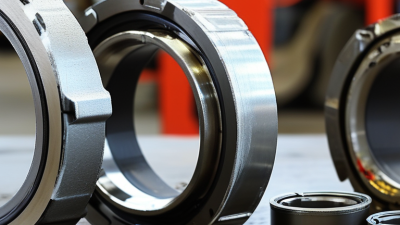
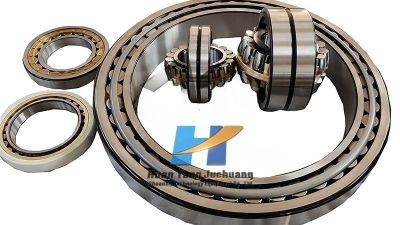
The 7512-3104710 tapered roller bearing (10079/710m) is engineered for heavy-duty mining dump trucks in the 75302, 75306, and 7540 RMK configurations. Its tapered roller geometry distributes radial and axial loads across multiple contact lines, making it suitable for high-capacity wheel and drivetrain applications. Manufactured for demanding service, the bearing combines wear resistance, dimensional stability, and smooth rotation under severe shock, vibration, dust, and temperature variations.
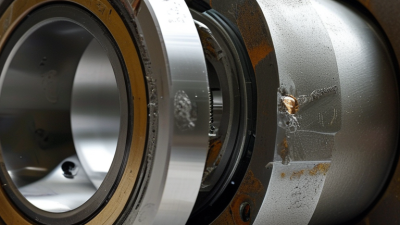
Bearing selection should be evaluated through recognized engineering standards. ISO 281 defines basic rating life as the number of revolutions reached by 90% of an identical bearing population under stated load and lubrication conditions, providing a consistent basis for service-life calculations. ISO 15243 also identifies common failure patterns, including abrasive wear, surface fatigue, overheating, and improper mounting. These criteria emphasize the importance of correct preload, clean lubricant, accurate housing alignment, and protection from contamination when installing the 7512-3104710.
For mining fleets, reliable bearing performance directly supports equipment availability and maintenance planning. The bearing’s high load capacity helps manage repeated impact loads during loading and haulage, while its wear-resistant surfaces support stable operation over extended duty cycles. Routine inspection should monitor abnormal noise, temperature rise, seal condition, lubricant contamination, and changes in rotational resistance, particularly on trucks operating continuously in abrasive environments.
Start with the driveline, not a catalog number. Match torque, gear reduction, axle load, tire size, and duty cycle.
Horsepower does not show shock loads or low-speed torque. A heavy vehicle climbing uneven ground needs stronger gear teeth and better heat control. That shortcut can fail.
Record peak torque, average speed, axle load, tire diameter, and operating temperature. Compare them with continuous and peak ratings. Measure carefully.
Inspect backlash, seals, lubrication, and housing temperature. Unusual heat may indicate friction, overload, or poor lubrication. Clean housings can hide worn gears.
Electric motors deliver high torque immediately. This can stress gears during low-speed starts. Review cooling, regenerative braking loads, reduction ratio, and control compatibility.
Not always. Dual-motor layouts may require electronic torque coordination instead. Physical clearance also matters for cables, sensors, and cooling lines.
Use the loaded tire diameter, measured in meters. Wheel speed equals 64,000 divided by π, tire diameter, and 60. Gear ratio equals input rpm divided by wheel rpm. Check with a calibrated tachometer.
Tire slip, speedometer error, uneven wear, and vehicle load can distort the result. Also compare mounting dimensions, spline details, lubrication needs, and rated load. I might be wrong if the speed came from an unloaded test.
Choosing the right Belaz Differential starts with defining the truck’s operating duty cycle and payload class, ranging from 30 to 450 tonnes. For heavy applications, estimate required differential torque by considering payload, axle loading, rolling resistance, grade resistance, and an 18% incline. A 450-tonne payload requires especially careful analysis to prevent overheating, gear damage, or premature wear. The differential must also match the vehicle’s mechanical or electric driveline, including its torque delivery characteristics and control system.
Before making a decision, verify the gear ratio against the target top speed of 64 km/h and the tire diameter. Confirm compatibility with axle loads, spline dimensions, housing design, seals, bearings, and approved lubricant specifications. Finally, compare life-cycle cost rather than purchase price alone, considering service intervals, rebuild requirements, expected operating life, and parts availability. A properly matched differential can improve reliability, reduce downtime, and provide more predictable maintenance costs in demanding haulage conditions.