inquiry
Leave Your Message
0%

Picking the right Belaz Oil Seal Cover Housing isn't just about matching a part number. You've got to pay attention to operating temperature, how the shaft moves, the oil type, mounting pressure, and dust exposure. A housing working beside an open-pit haul road gets shaken by vibration nonstop. A tiny alignment mistake can let fine grit work its way in. And sometimes the damage doesn't show up for weeks.

Elena Petrova, an independent heavy-equipment sealing consultant, explains it this way: “A reliable oil seal housing begins with fit, alignment, and material compatibility—not appearance alone.” That practical view is useful. A polished cover can still hide poor machining. Buyers should check the housing dimensions, bolt pattern, sealing surface, and replacement seal specs. They should also confirm the exact BelAZ model and axle configuration. Small differences really do matter.

This guide looks at selection points for BelAZ 75135, BelAZ 75170, BelAZ 75302, and BelAZ 75306 applications. It also touches on the product phrase Motor outer cover Belaz 75135 Belaz 75170 Belaz 75302 Belaz 75306, which may describe related search needs rather than one universal component. That distinction is easy to miss. A supplier should provide drawings, material details, inspection records, and installation guidance. Ask for evidence.

Field conditions are rarely perfect. Existing wear, uneven bolts, or a bent mounting face can all change the result. I wouldn't treat any catalog description as complete without measuring. Sometimes the safest choice isn't the cheapest housing. It's the part that fits correctly, seals consistently, and can still get support after delivery.
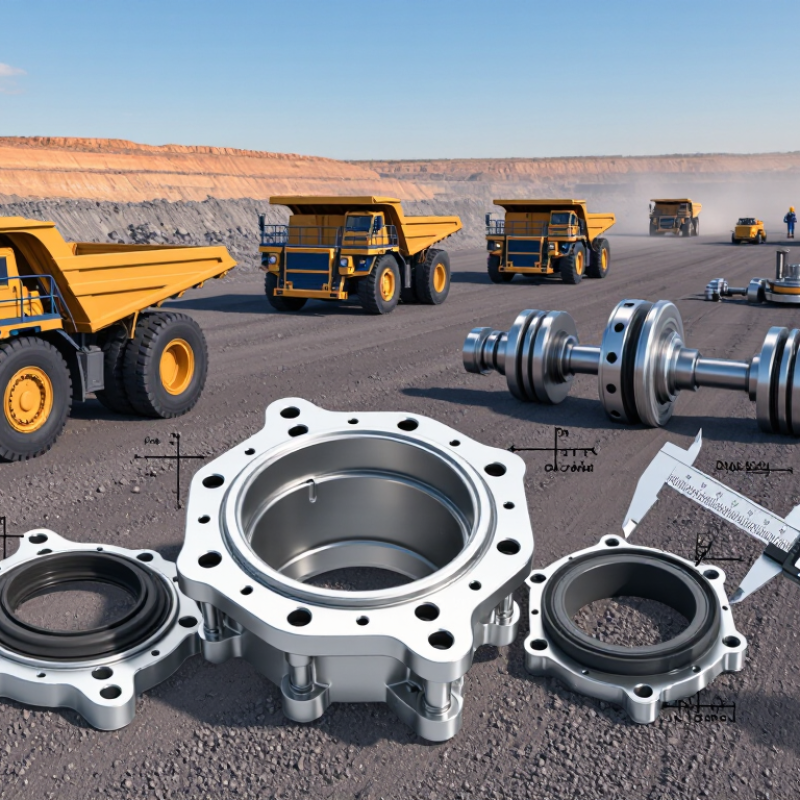
How to Choose a Belaz Oil Seal Cover Housing?

Understanding the Role of a Belaz Oil Seal Cover Housing

Understanding the Role of a Heavy-Duty Oil Seal Cover Housing

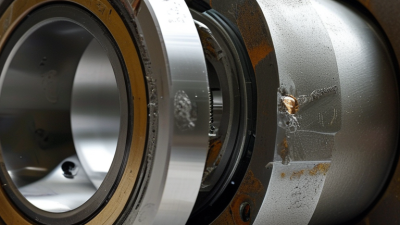
An oil seal cover housing protects the shaft seal from dust, water, and impact. It also keeps the seal aligned during operation. In a large haul truck, small alignment errors can create heat, leakage, and rapid shaft wear. The housing must match the seal diameter, shaft clearance, bolt pattern, and installation depth. These details matter more than a thicker casting alone.

The U.S. Department of Energy’s Operations and Maintenance Best Practices Guide reports that predictive maintenance can reduce maintenance costs by 25% to 30%. It can also reduce downtime by 35% to 45%.

These figures support routine checks around the cover housing. Inspectors should look for fretting marks, distorted bolt holes, cracked edges, and polished contact bands. A dry seal area is not always healthy. It may hide hardened rubber or a blocked lubrication path.

Material choice needs practical judgment. Ductile iron offers strength under shock loads, while machined steel can improve dimensional control. Corrosion resistance also matters in wet or abrasive environments.

The ISO 6194 sealing standard highlights the importance of controlled seal installation and shaft surface quality. However, field conditions rarely match laboratory assumptions.

I have seen a correct-looking housing fail because its mounting face was uneven. Measure the actual assembly, not only the drawing. Good selection combines report data, inspection evidence, and service history.

Identifying Your Belaz Model and Housing Specifications

Choosing an oil seal cover housing begins with accurate machine identification. Record the haul truck’s model, production year, suspension-cylinder position, and serial range. Then compare the removed housing with the parts drawing. Small differences matter, especially bore diameter, bolt spacing, cover thickness, and seal direction.

Measure with calibrated tools, not by eye. Check the shaft diameter, housing depth, shoulder clearance, and groove width. The required seal must match both the elastomer and the operating environment. ISO 6194 covers rotary shaft lip seals, while ISO 1629 helps classify elastomer materials. For a replacement listed as Bottom cover for suspension cylinder 540-2917118-11, verify the drawing revision before ordering. A similar number can still represent another cylinder position.

Contamination deserves serious attention. SKF bearing failure analysis commonly identifies inadequate lubrication as about 36% of failures and contamination as about 14%. These figures concern bearings, not seal covers, but they reveal a useful maintenance pattern. Dirt entering through a damaged housing can quickly mark the shaft surface. Inspect for scoring, oval wear, loose fasteners, and hardened sealing lips. I have seen clean-looking housings fail after installation. That was a poor assumption. Recheck flange flatness, gasket compression, and drainage paths before final assembly. If field measurements conflict with the parts catalog, stop and investigate the serial number.

Selecting the Correct Oil Seal Cover Housing Material

Selecting the correct oil seal cover housing material starts with temperature, pressure, dust, and service fluid. Field inspections often reveal scoring around the seal bore, not seal failure alone. Steel housings suit heavy impact and repeated torque. Aluminum reduces weight, but it can distort if bolts are overtightened or heat rises quickly.

Material choice should match the elastomer. NBR commonly handles petroleum oils near -40°C to 100°C. FKM tolerates higher temperatures, often approaching 200°C, but cold flexibility can be weaker. PTFE performs across a wider temperature range, yet it needs careful support because it is less forgiving during installation.

These are typical values, not guarantees. Compound grade matters.

The U.S. Geological Survey reported roughly 2.5 billion metric tons of global iron ore production in 2023. That scale reflects the severe, abrasive environments surrounding many haulage operations. Fine dust can work beneath a cover and damage the sealing lip within hours. ISO 23936 guidance supports evaluating material compatibility with fluids and operating conditions. ASTM D2000 also helps classify elastomer performance. In practice, I prefer a corrosion-resistant steel housing when impact and contamination dominate. I would choose aluminum only after checking bolt load, thermal expansion, and mounting rigidity. That judgment can be wrong without field data. A small temperature log and used-seal inspection are often worth more than a catalogue rating.

Checking Dimensions, Compatibility, and Installation Fit

Choosing an oil seal cover housing starts with accurate measurements. Record the shaft diameter, housing bore, cover depth, and bolt-circle spacing. Use a micrometer, not a ruler. ISO 6194-1:2018 emphasizes controlled seal dimensions and mounting conditions for rotary shaft seals. A difference of 0.2 mm can create uneven compression or leakage.

Check compatibility with the existing shaft, seal lip, gasket, and lubricant. Confirm the housing material can tolerate operating temperature and vibration. ISO 3601-1:2012 provides dimensional tolerances for O-rings, which helps when a secondary sealing ring is included. For a Reverse shaft cover, inspect the shaft shoulder and rotation direction carefully. The lip should face the fluid being retained. Avoid forcing the cover over a dry seal. Lightly lubricate the lip with the approved fluid, then tighten bolts in a cross pattern. Over-tightening may distort the housing.

Tips: Clean every contact surface. Measure twice. Check for burrs with a fingertip. Use a depth gauge before final tightening. Industry maintenance guidance commonly links contamination and poor installation with early seal failure, though field conditions vary. I still recheck alignment after assembly; a cover can look seated while remaining slightly tilted. A slow hand rotation should feel smooth, without scraping or tight spots. Record the final dimensions and torque for future inspections.

How to Choose a Belaz Oil Seal Cover Housing? - Checking Dimensions, Compatibility, and Installation Fit

Inspection Dimension What to Check Practical Selection Guidance Recommended Verification Installation-Fit Risk
Shaft diameter Measure the actual shaft diameter at the oil-seal contact area and confirm the shaft is round and free from grooves. The seal inside diameter must match the shaft size specified by the seal manufacturer. Do not select by cover outside dimensions alone. Use a calibrated micrometer at several angular positions and locations along the running track. An incorrect shaft size can cause leakage, excessive friction, or premature lip wear.
Housing bore diameter Check the bore where the seal or seal carrier is seated, including roundness, taper, and surface damage. Match the bore to the selected seal or carrier drawing. A press-fit value is application-specific and should not be guessed. Measure with a bore gauge or internal micrometer at multiple depths and directions. An oversized bore may allow movement or leakage; an undersized bore may distort the seal.
Cover outside diameter Confirm the external envelope against the available mounting space and adjacent components. Allow clearance for bolts, tools, guards, hoses, and shaft movement during operation. Compare the measured cover dimensions with the equipment drawing or a verified sample. Insufficient clearance can prevent assembly or cause contact with rotating parts.
Axial installation depth Measure the available depth from the housing face to the internal shoulder or seal stop. The cover, gasket, seal, and retaining features must fit without bottoming out or reducing the designed seal compression. Use depth gauges and check the assembly stack-up before final installation. Excessive depth may leave the seal unsupported; insufficient depth may prevent the cover from seating.
Bolt-hole pattern Check the number of holes, pitch-circle diameter, hole diameter, spacing, and orientation. The pattern must match the mating housing. Slotted holes should not be used to compensate for an incorrect pattern unless approved by engineering. Measure center-to-center distances and compare them with the mating-part drawing. Misalignment can cause uneven clamping, cover distortion, or damaged threads.
Fastener specification Confirm thread size, pitch, engagement length, strength grade, washers, and tightening sequence. Use the torque value specified for the actual fastener, lubricant condition, and equipment design. Verify threads with a gauge and tighten with a calibrated torque wrench. Over-tightening can distort the cover; under-tightening can permit movement and leakage.
Seal type and dimensions Identify seal construction, shaft diameter, housing diameter, width, lip direction, and any dust lip or garter spring. Select a seal designed for the fluid, temperature, pressure, shaft speed, and direction of rotation. Read the seal marking and confirm all dimensions against the seal manufacturer’s technical data. A dimensionally similar seal may still fail if its material or lip design is unsuitable.
Material compatibility Consider housing material, seal elastomer, lubricant type, contaminants, and operating temperature. Common elastomer choices include nitrile rubber for many mineral-oil applications and fluorocarbon rubber for higher-temperature or chemically demanding service, subject to supplier confirmation. Check the fluid safety data and the seal material compatibility chart. Chemical swelling, hardening, or shrinkage can quickly produce leakage.
Shaft surface condition Inspect the seal track for scoring, corrosion, burrs, sharp edges, and excessive wear. The running surface should be smooth, concentric, and suitable for the selected seal. Use the seal supplier’s specified roughness range. Use visual inspection, a surface-finish comparator, and runout measurements where required. A worn or rough shaft can damage the new lip even when the cover dimensions are correct.
Concentricity and runout Check alignment between the shaft, housing bore, cover, and seal centerline. Use the equipment drawing or seal supplier’s maximum allowable runout and misalignment values. Measure with a dial indicator while slowly rotating the shaft. Excessive runout can pump lubricant past the lip and create uneven wear.
Gasket or O-ring groove Confirm groove diameter, width, depth, corner radii, and sealing-face condition. Use the correct gasket or O-ring size and avoid reusing damaged sealing elements. Measure the groove and inspect for nicks, contamination, and deformation. Incorrect groove geometry can cause pinching, extrusion, or a static leak.
Installation chamfers Check for a lead-in chamfer on the shaft and a suitable entry radius on the housing bore. Remove burrs and protect the sealing lip from keyways, splines, threads, and sharp edges during installation. Inspect by touch and visual examination before applying lubricant. A sharp edge can cut or roll the lip during insertion.
Lubrication and orientation Confirm which side faces the lubricant and whether the seal has a dust or pressure lip. Lightly lubricate the sealing lip with a compatible lubricant unless the supplier specifies a dry installation. Compare the installation direction with the seal cross-section and service conditions. Incorrect orientation can cause immediate leakage or contamination ingress.
Pressing method Ensure the installation tool contacts the rigid outer casing or approved press surface evenly. Use a flat, square driver or press fixture. Do not hammer directly on the flexible sealing lip. Check that the seal enters squarely and reaches the specified seating depth. Tilting or localized force can deform the seal and create an uneven contact pattern.
Operating conditions Review speed, temperature, pressure, lubricant, dirt, water exposure, and expected service life. Choose the cover and seal assembly for the actual duty cycle, not only the static dimensions. Compare operating data with the seal and housing supplier’s ratings. A correct dimensional fit may still fail under excessive speed, heat, pressure, or contamination.
Final fit test Confirm that the cover seats fully, the shaft rotates freely, and no seal lip is trapped or displaced. Perform a dry rotation check followed by a controlled leak inspection after lubrication and operation. Record measurements, torque values, seal identification, and post-installation observations. Skipping the final check can allow misalignment or leakage to remain undetected.

Evaluating Seal Performance in Mining Conditions

How to Choose a Belaz Oil Seal Cover Housing?

Evaluating Seal Performance in Mining Conditions

Mining equipment works through dust, water, vibration, and sudden temperature changes. A suitable oil seal cover housing must control shaft movement without allowing abrasive particles inside. The International Labour Organization reports that mining employs about 1% of the global workforce but causes roughly 8% of fatal occupational accidents. Reliable sealing supports safer maintenance by reducing leaks and unexpected component failures.

Check the housing material, shaft alignment, bore tolerance, and drainage path before selection. ISO 6194-1 guidance highlights the importance of shaft surface quality, concentricity, and correct seal installation. In a haul truck, a small lip can face red dust, wet clay, and repeated shock loads. That environment demands a rigid housing with accurate retention, not merely a thicker seal.

Field inspections should record leakage, lip wear, housing looseness, and temperature changes. A 2023 mining maintenance survey by Plant Engineering identified contamination and lubrication problems among common causes of rotating-equipment downtime. The data is useful, though not every mine reports failures consistently. That limitation matters. Choose materials according to actual fluid compatibility and site temperature, then verify performance through inspection intervals and measured results. A clean fit is not enough.

Comparing Quality, Cost, and Supplier Reliability

How to Choose a Belaz Oil Seal Cover Housing?

Quality begins with fit, material, and measurable operating limits. Check bore diameter, mounting holes, shaft clearance, and sealing-lip alignment. A housing should resist distortion near hot brakes, abrasive dust, and repeated vibration. Ask for elastomer specifications, hardness data, temperature limits, and dimensional inspection records. The ISO 14224 reliability framework supports consistent failure and maintenance data collection, which helps compare components objectively.

Cost needs a wider lens than the purchase price. The U.S. Department of Energy’s Operations & Maintenance Best Practices Guide reports potential maintenance savings of 8% to 18% through stronger preventive practices. A poorly machined cover can erase that saving quickly. Compare expected service life, replacement labor, freight, downtime exposure, and warranty response. The search phrase Housing Brake housing 7555A-3501089 75570-3501089 BelAZ brake parts may identify a matching application, but it does not prove compatibility.

Supplier reliability deserves documented evidence. Request batch traceability, material certificates, inspection photos, and a clear nonconformance process. Check whether the supplier keeps critical dimensions in stock, not only finished assemblies. Ask for realistic lead times during peak demand. Industry surveys consistently rank delivery consistency and quality stability among major maintenance concerns. I have seen quotation sheets look excellent while packaging protection was weak. That detail matters. A scratched sealing surface can become an early leak. My checklist is not perfect, so I recheck drawings against the actual housing before approval.

Verifying the Housing Before Purchase and Installation

Before buying an oil seal cover housing, verify the part against the equipment record, not only the seller’s photograph. For the Oil sump housing 7540-2917040 BelAZ Belaz 540 Belaz 549, confirm the casting number, bolt pattern, shaft opening, gasket surface, and oil-return passages. Measure the old housing with calibrated calipers. Check the bore for ovality, scoring, and corrosion. A clean appearance can hide distortion.

The U.S. Department of Energy’s Operations and Maintenance Best Practices Guide reports that predictive maintenance can reduce costs by 8–12% compared with preventive maintenance. It also indicates potential savings of 30–40% against reactive maintenance. That supports a documented pre-installation inspection. Record flatness, mounting-hole condition, and shaft runout before fitting the seal. ISO 6194-1 also emphasizes correct seal dimensions, alignment, and surface finish for reliable rotary shaft sealing.

Installation needs equal care. Remove burrs from the housing edge. Protect the sealing lip during shaft entry. Apply only the lubricant approved for the seal material. Tighten fasteners in a cross pattern, using the specified torque. Do not force a mismatched gasket. It seems obvious, but this mistake remains common. I would recheck the flange after the first operating cycle, because thermal expansion can reveal a minor leak. One missed measurement may become several hours of downtime.

FAQS

What does an oil seal cover housing do?

It shields the shaft seal from dust, water, and impact. It also keeps the seal aligned during operation.

Which dimensions should be checked before installation?

Check the bore diameter, shaft clearance, bolt pattern, mounting depth, and sealing-lip position. Measure the actual assembly.

What signs may indicate housing damage?

Look for fretting marks, cracked edges, distorted bolt holes, and polished contact bands. Uneven mounting faces matter too.

Can a dry seal area still have problems?

Yes. A dry area may hide hardened rubber or a blocked lubrication path. Dry does not always mean healthy.

Which housing material suits severe service?

Steel handles impact and repeated torque well. Ductile iron also suits shock loads. Aluminum saves weight but may distort.

How should material and seal compatibility be assessed?

Compare temperature, pressure, dust, fluid exposure, and elastomer type. Typical temperature ratings are not guarantees.

What should be considered beyond the purchase price?

Include service life, replacement labor, freight, downtime, and warranty response. A cheap housing may become expensive quickly.

How can supplier reliability be checked?

Request batch traceability, material certificates, inspection records, and realistic lead times. Check packaging protection carefully.

Does a matching part number prove compatibility?

No. Confirm dimensions, shaft clearance, mounting rigidity, and installation depth. A catalogue match can still fail in the field.

How can maintenance teams improve housing reliability?

Record temperature, vibration, leakage, and seal condition during inspections. Predictive checks may reduce downtime, but field evidence is essential.

Conclusion

Choosing the right Belaz Oil Seal Cover Housing is essential for protecting rotating components and maintaining reliable equipment performance in demanding mining environments. Start by identifying the exact vehicle model, axle or drive assembly, and required housing specifications. Confirm the housing’s material is suitable for heavy loads, vibration, temperature changes, dust, moisture, and exposure to lubricants. Dimensions, mounting points, bore size, sealing surfaces, and fastener locations should be carefully compared with the original component to ensure a precise installation fit.

Before purchasing, evaluate the housing’s compatibility with the selected oil seal and inspect its surface finish, strength, and manufacturing accuracy. A well-designed housing should support consistent sealing performance, reduce contamination risks, and help prevent premature wear or lubricant leakage. Balance quality and cost by considering service life, maintenance requirements, and supplier reliability rather than choosing solely on price. Finally, verify all measurements, technical details, and installation conditions before installation to avoid costly downtime and ensure dependable operation.
Aurelia

Aurelia

Aurelia is a dedicated professional marketer at Huanyang Juchuang (Shaanxi) Technology Equipment Co., Ltd., where she plays a pivotal role in promoting the company's extensive product range. With a deep understanding of parts for buses, agricultural machinery, commercial vehicles, and mining......
Previous China Best Belaz First Stage Planetary Gear Shaft Supplier