Selecting a reliable Belaz Drive Shaft supplier requires more than comparing prices or catalog photographs. Global buyers need proven fitment, traceable materials, and practical support after delivery. A shaft may look correct on a warehouse floor, yet fail under vibration, dust, and heavy haul cycles.
Andrei Kovalenko, a heavy-mining drivetrain engineer, says, “A drive shaft should be judged by its working hours, not its purchase price.” His view reflects the experience of maintenance teams operating BelAZ trucks in demanding pits. This guide examines five suppliers serving international buyers, including BelAZ specialists and established drivetrain manufacturers. It considers engineering capability, production consistency, export experience, and replacement support.
The exact specification matters.
Buyers searching for Intermediate propeller shaft 7555E-2202010 7555E-2202010-10 BelAZ drive shaft should verify spline dimensions, flange spacing, tube diameter, balancing quality, and operating angle. They should also request inspection records and confirm compatibility with the truck’s serial number. A supplier that answers quickly is useful. A supplier that provides measurable evidence is better.
Field details often reveal the difference. Check weld appearance, grease fitting access, protective coating, and packaging against moisture. Ask how the shaft was balanced before shipment. Lead time also deserves attention, especially when one idle haul truck can affect an entire production shift.
No ranking fits every mine.
Some buyers may value original-equipment confidence. Others may prefer a specialized manufacturer with faster customization. This shortlist cannot remove every purchasing risk, but it can make technical comparisons clearer and more disciplined.
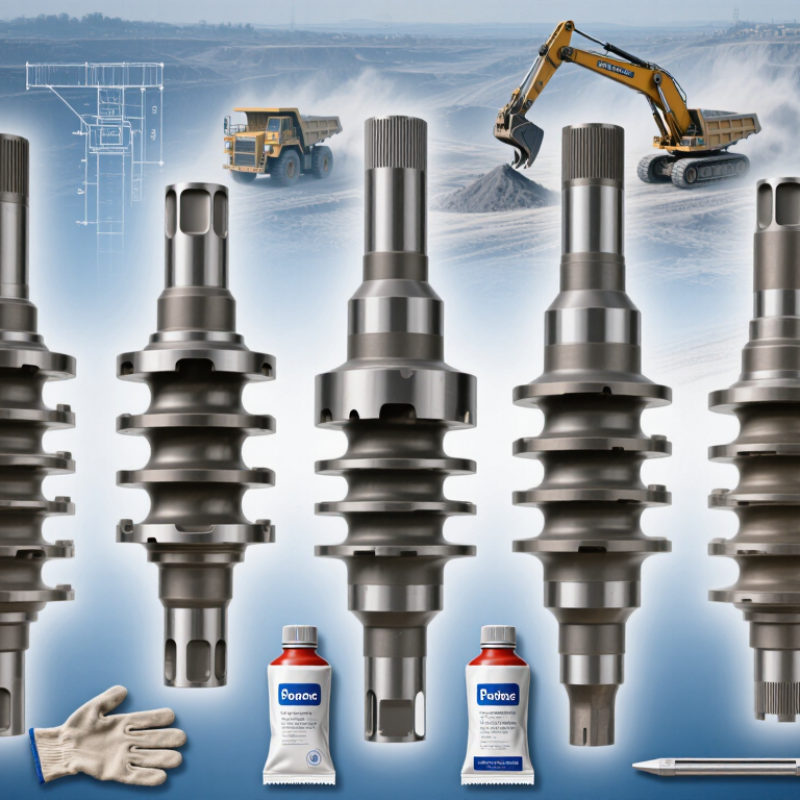
Heavy-duty drive shafts transfer engine torque to the axle and support controlled power delivery. They also absorb small alignment changes between connected driveline components. In large rigid-frame mining trucks, shafts usually combine forged steel yokes, splined sections, universal joints, and balanced tubes. Their design must handle high torque, vibration, dust, and repeated shock loading. A clean surface can mislead. Internal fatigue may already exist.
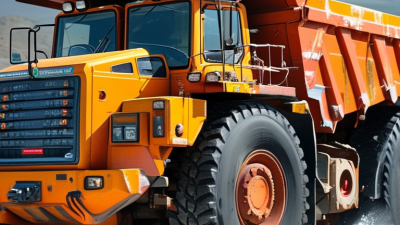
Mining trucks operate in harsh cycles, often carrying more than 100 tonnes across uneven haul roads. The USGS Mineral Commodity Summaries 2024 reported global iron ore mine production of about 2.5 billion metric tons in 2023. This scale explains the constant demand for dependable haulage equipment. Deloitte’s Tracking the Trends 2024 also identifies asset reliability and productivity as major mining priorities. A suitable drive-shaft supplier should provide torque calculations, dynamic-balancing records, material certificates, and dimensional inspection data. Applications include open-pit mines, quarry operations, and heavy-duty transport areas.
Tips: Confirm operating torque, shaft length, spline dimensions, joint angles, and installation limits before ordering. Ask for vibration-test results and replacement seals. I would not trust catalog ratings alone; real duty cycles are often rougher than laboratory assumptions. Keep one inspected spare shaft available. Small delays can stop a large truck.
The chart compares representative yield-strength benchmarks for widely used drive-shaft steels. Actual values vary with grade, heat treatment, section size, and manufacturing standard, so buyers should verify the material certificate and heat-treatment condition with each supplier.
Choosing a drive shaft supplier for heavy mining trucks requires more than comparing prices. The correct part must match the truck model, axle configuration, torque demand, and operating environment. Request dimensional drawings, spline details, tube diameter, flange specifications, and allowable operating angles. Small differences can create vibration, premature wear, or installation delays.
A reliable supplier should provide material certificates, heat-treatment records, balancing reports, and fatigue-test data. Ask whether each shaft receives dynamic balancing after assembly. A vibration reading at the workshop can reveal problems before shipment. Inspect the supplier’s quality system, inspection equipment, and production history for comparable mining applications. Experience matters here. A polished website does not prove manufacturing capability.
Global buyers should also compare packaging, corrosion protection, replacement-part availability, and technical support across time zones. Confirm realistic lead times, inspection checkpoints, warranty terms, and documentation requirements before placing an order. Traceable serial numbers are valuable when several trucks operate in dusty, remote areas. Communication can fail. Written drawings reduce that risk.
Cost still matters, but the cheapest shaft may carry higher downtime costs. Compare the full service life, not only the purchase invoice. One practical weakness is relying too heavily on supplier-provided test reports. Independent inspection may add expense, yet it can expose dimensional errors or incomplete records. I would also request references from operators using similar loads and haul cycles. Claims deserve evidence.
An OEM-focused BelAZ drive shaft supplier starts with the vehicle’s measured operating conditions. Engine output, axle spacing, flange patterns, and working angles guide the technical drawing. Technicians inspect worn shafts, yokes, splines, and bearing seats before proposing dimensions. That practical review prevents a polished part from becoming an expensive mismatch. Field evidence matters. Load records and maintenance notes can reveal torsional shocks that catalogues rarely show.
Experienced manufacturers control forging, machining, heat treatment, and final balancing under documented procedures. The tube and joint materials should match the expected torque, impact loads, and operating temperature. Technicians check spline depth, flange concentricity, weld penetration, and shaft runout. Dynamic balancing then reduces vibration across changing speeds. Every unit should carry a traceable drawing, material certificate, inspection report, and batch reference.
OEM work is rarely a simple replacement exercise. A first sample may still need changes after installation, especially when previous repairs altered alignment. That is not failure, but it deserves honest review. Suppliers should support dimensional feedback, controlled revisions, and small-batch validation before larger production. Protective packaging also matters, since exposed splines can suffer damage during long-distance handling. Clear communication keeps the final shaft compatible, serviceable, and easier to inspect in demanding working conditions.
Supplier Two focuses on heavy-duty aftermarket drive shaft production for mining trucks and demanding haulage fleets. Its workshop should begin with measured shaft length, flange pattern, spline profile, and operating angle. A perfect fit is never guaranteed from a photo. Experienced technicians compare worn components with engineering drawings before machining begins.
The production process typically includes forged steel selection, controlled heat treatment, precision spline cutting, and dynamic balancing. Each shaft should receive dimensional inspection and a documented load test. I would also request checks for runout, hardness, weld penetration, and flange alignment. Small errors can create vibration, seal wear, or early joint failure. That detail matters.
Global buyers often search using terms like “Half shaft Belaz Price Belaz Truck Belaz Truck Price,” but price alone can mislead. A lower quotation may exclude balancing, protective coating, packaging, or replacement hardware. The supplier should provide material certificates, inspection records, warranty terms, and realistic production timelines. Crating should protect machined surfaces from moisture and impact during ocean transport. My concern is simple: aftermarket parts may vary between truck generations. Buyers should verify the serial range and axle specification before approving production. Even careful suppliers can miss an outdated drawing.
Supplier Three focuses on custom shaft engineering for large mining haul trucks. This approach suits fleets with worn, modified, or poorly documented driveline parts. An experienced supplier begins with measurements, not assumptions. Engineers check shaft length, spline count, flange spacing, pilot diameter, and operating torque. Small errors can create vibration, premature bearing wear, or difficult installation.
The workshop should review the original drawing, field measurements, and service history together. Material selection may include high-strength alloy steel, matched to the truck’s load cycle and working temperature. Heat treatment must be recorded, not simply promised. Dynamic balancing is also essential, especially for long shafts operating under heavy loads. Non-destructive inspection can reveal cracks that machining alone will not show. Keep the records clear.
A dependable supplier provides dimensional reports, hardness results, balance data, and traceable material certificates. Trial fitting with the customer’s yokes or flanges can prevent expensive surprises. Packaging matters too. A protected spline and sealed surface are safer after long-distance transport. In practice, custom work is rarely perfect on the first drawing. Site measurements may be incomplete, and older components can hide previous repairs. That is where careful questioning helps. The supplier should revise the design when evidence changes, rather than defend an attractive but incorrect assumption. Clear communication, realistic lead times, and documented approval points make the shaft easier to trust.
Technical evaluation framework for custom heavy-duty drive-shaft engineering and procurement
| Evaluation Dimension | Custom Engineering Requirement | Supplier Three Review Point | Buyer Evidence to Request |
|---|---|---|---|
| Application Definition | The shaft design must be matched to vehicle model, axle arrangement, installation length, operating speed, torque, articulation angle, and duty cycle. | Confirm that the design review uses measured installation data rather than only a general vehicle description. | Approved drawing, operating data sheet, dimensional survey, and duty-cycle assumptions. |
| Torque and Speed Rating | Rated torque, peak torque, rotational speed, torsional vibration, and service factor must be calculated for the intended drivetrain. | Check whether continuous and transient loads are separated in the calculation package. | Torque-speed envelope, torsional analysis, safety-factor calculation, and design assumptions. |
| Shaft Configuration | The assembly may require a tubular shaft, solid shaft, universal joints, slip spline, flange yokes, guards, and balancing weights. | Verify that all interfaces are dimensionally compatible with the existing drivetrain and service access requirements. | Interface drawing, spline details, flange dimensions, joint-angle limits, and exploded assembly drawing. |
| Material Selection | Material selection should consider yield strength, fatigue strength, weldability, impact toughness, temperature, and corrosion exposure. | Require a material grade and mechanical-property specification suitable for the calculated loads. | Material certificate, heat number, chemical composition, tensile results, and impact-test results where specified. |
| Heat Treatment | Spline, yoke, flange, and bearing-seat areas may require localized hardening or controlled heat treatment to improve wear and fatigue performance. | Confirm that hardness requirements are defined by location and that distortion is controlled after treatment. | Heat-treatment chart, hardness map, furnace record, and dimensional inspection after treatment. |
| Spline and Interface Accuracy | Spline tooth form, pitch, major diameter, minor diameter, fit, surface finish, and lubrication access must match the mating component. | Reject interchangeable-looking parts that lack verified mating dimensions or functional fit testing. | Spline inspection report, calibrated gauges, mating-part trial fit, and wear-clearance limits. |
| Welding and Fabrication | Welded tubular assemblies require controlled joint preparation, qualified procedures, suitable filler metal, and distortion control. | Verify welder qualification, welding procedure qualification, and inspection coverage for critical joints. | Welding procedure, welder qualification, weld map, visual inspection, and applicable NDT reports. |
| Dynamic Balancing | The complete rotating assembly should be dynamically balanced at the specified operating condition to limit vibration and bearing loads. | Require the balance grade, correction method, test speed, and residual-unbalance result to be stated clearly. | Balancing certificate referencing ISO 21940-11 or the purchaser’s specified equivalent. |
| Non-Destructive Testing | Critical areas such as welds, flanges, yokes, splines, and fillets should be inspected for surface or internal discontinuities as appropriate. | Select magnetic-particle, penetrant, ultrasonic, or radiographic testing according to material and defect risk. | NDT procedure, inspector qualification, acceptance criteria, and traceable inspection reports. |
| Dimensional Control | Runout, concentricity, flange face position, overall length, joint phasing, and mounting-hole location must remain within drawing tolerances. | Confirm that inspection is performed after welding, heat treatment, machining, and balancing. | Final inspection report, calibrated equipment records, runout readings, and coordinate-measurement data where required. |
| Environmental Protection | Coating, sealing, grease protection, and storage preservation should reflect mud, water, dust, temperature variation, and outdoor exposure. | Check coating system, dry-film thickness, masking requirements, grease specification, and transport protection. | Coating data sheet, thickness readings, preservation instructions, and packaging specification. |
| Prototype Validation | A prototype should be checked for fit, phasing, articulation, vibration, temperature, lubrication access, and abnormal wear before production release. | Use an agreed validation plan with measurable acceptance criteria and documented corrective actions. | Fitment report, test records, vibration readings, inspection photographs, and signed approval record. |
| Traceability and After-Sales Support | Each assembly should be identifiable by serial number or batch number and supported by replacement-part and maintenance information. | Confirm availability of service drawings, repair instructions, balancing data, spare components, and technical response procedures. | Serial-number system, inspection dossier, spare-parts list, warranty terms, and maintenance schedule. |
An export-oriented supplier should understand heavy-duty haulage, not just copy a parts list. Experienced teams verify shaft dimensions, spline profiles, flange patterns, and heat-treatment records before quoting. They also confirm the machine model, operating conditions, and required delivery port. Small errors can stop a loaded truck.
For buyers searching Propeller shaft 75135-2202010 7555B-2202010 7555B-2202010-10 BelAZ replacement parts , traceability matters. Ask for inspection photos, material certificates, balance-test results, and packing details. A reliable exporter should provide clear drawings and explain tolerance limits. Requesting a sample measurement is wise. It may feel slow, but it prevents expensive returns.
Tips:
Compare the supplier’s stated dimensions with your removed shaft. Check flange holes, overall length, spline count, and joint movement. Confirm whether the quotation includes protective caps, export packing, and replacement seals. Do not rely on one catalogue number alone; field repairs sometimes create undocumented variations. A supplier may appear confident, yet missing test records should remain a warning. Ask practical questions and keep every specification in writing.
Fast delivery matters when a mining truck is idle beside a loading area. A capable drive shaft supplier should confirm stock, machining capacity, and dispatch time before accepting an order. For the BelAZ Cardan Shaft 7548-2208014-01 , buyers should request dimensional drawings, spline details, flange measurements, and material specifications. These records reduce costly fitting errors.
Experienced providers usually maintain ready-to-ship assemblies and common replacement components. They can also arrange urgent inspection, protective packaging, and documented transport tracking. Ask whether the shaft receives balancing checks before shipment. Excessive vibration often begins with poor alignment or incomplete quality control. Small details matter.
Fast service is not always reliable service. A rushed supplier may overlook coating thickness, grease fitting position, or bearing clearance. Buyers should compare inspection reports, warranty terms, and technical response times. A practical provider will explain limitations instead of promising impossible delivery dates. I would also request recent, verifiable references from comparable mining operations. That step takes time. It can prevent a longer delay later. Suppliers should provide clear export documents and use packaging that protects splines from moisture, impact, and contamination during transit. Even strong suppliers make mistakes, so keep measurements and photographs from the original shaft for final verification.
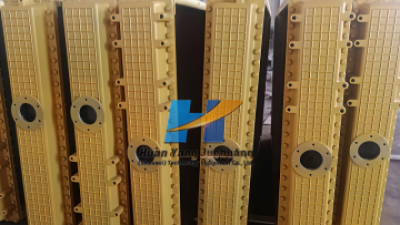
For heavy-duty mining dump trucks, the 75180-1300008, 75301-1300008, and 75306-1300008 radiator units provide dependable cooling performance across a full range of demanding applications. Designed for harsh working environments, these radiator assemblies are manufactured from high-strength, wear-resistant materials that help withstand vibration, dust, heat, and continuous load conditions. Their robust construction supports stable engine temperature control and reliable operation during extended mining cycles.
Available for wholesale supply as OEM-quality or aftermarket replacement parts, these radiator units are produced with precision dimensions to support accurate installation and excellent compatibility. Consistent manufacturing standards help reduce fitting time, minimize maintenance delays, and keep essential equipment operating efficiently. The reinforced design and dependable heat dissipation performance contribute to a longer service life, helping reduce unexpected downtime and replacement frequency.
Whether purchasing individual units or arranging bulk orders, selecting the correct radiator model is essential for maintaining cooling efficiency and equipment productivity. The 75180-1300008, 75301-1300008, and 75306-1300008 options offer practical solutions for long-term mining operations, combining reliable performance, durable materials, and cost-effective parts support.
The exporter should verify shaft dimensions, spline profiles, flange patterns, and heat-treatment records. A wrong measurement can stop a loaded truck.
Provide the machine model, working conditions, delivery port, and removed-shaft measurements. Photos help.
Request technical drawings, material certificates, inspection photos, balance-test results, and packing details. Missing records deserve caution.
Check overall length, flange-hole spacing, spline count, and joint movement. Measure twice.
No. Field repairs can create undocumented variations. Compare the catalogue information with the physical shaft.
Confirm available stock, machining capacity, inspection timing, and dispatch arrangements before placing the order.
Ask whether balancing checks were completed. Also verify alignment, bearing clearance, and grease-fitting position.
Packaging should protect splines from moisture, impact, and contamination. Protective caps and sealed materials are useful.
Not always. A rushed supplier may overlook coating thickness or quality checks. Speed can mislead.
Keep measurements, photographs, specifications, inspection reports, and written warranty terms. Suppliers make mistakes, too.
This guide explains the purpose, design, and common applications of the Belaz Drive Shaft, a critical component for transferring power reliably in large mining and heavy-duty vehicles. It outlines how buyers can evaluate suppliers worldwide by comparing material quality, engineering standards, manufacturing capacity, inspection procedures, customization options, replacement compatibility, delivery performance, and after-sales support.
The article introduces five supplier profiles to help global purchasers make informed decisions. The first focuses on original-equipment-style manufacturing and consistent production standards. The second specializes in durable aftermarket solutions for demanding operating conditions. The third provides custom engineering for different vehicle configurations and technical requirements. The fourth emphasizes export-ready replacement parts and international order coordination, while the fifth is designed for buyers who prioritize rapid quotations, production, and delivery. Together, these categories provide a practical framework for selecting a dependable Belaz Drive Shaft supplier based on application, budget, quality expectations, and service needs.